Where Do Power Reserves in Cars Come From?
You buy a car with a 2.0 turbo engine rated by the manufacturer at 150 HP. Shortly after, you discover that the exact same engine in another model produces… 190 HP. And sometimes even 220 HP. Magic? No. Those are precisely the power reserves that manufacturers intentionally leave in place.
The Same Engine, Different Power Output
Modern engines are very often available in several power variants. The manufacturer develops a single design and later limits it through software or additional components.
For example?
- 120 HP
- 150 HP
- 190 HP
Mechanically, the differences are often minimal — or sometimes there are none at all. The main changes usually involve:
- ECU mapping,
- boost pressure,
- fuel quantity,
- throttle response,
- torque limitations.
It’s a bit like a gaming PC running in power-saving mode. The potential is there — it’s just being limited.
Why Do Manufacturers Limit Power?
1. Emissions Regulations
The higher the power output, the harder it is to meet strict emissions standards. That’s why manufacturers often “calm down” the engine to make homologation easier.
Especially in Europe, automotive regulations can be absolutely ruthless.
2. Marketing and Model Segmentation
Manufacturers need to justify the price differences between model versions somehow.
If the base model already had full power, more expensive versions would lose much of their appeal. That’s why it’s often the case that:
- the weaker version gets restricted software,
- the stronger one has nearly the same engine but a different mapping.
And suddenly you have to pay several thousand euros extra for “more horsepower.”
3. Different Markets and Fuel Quality
A car sold in different countries has to cope with varying fuel quality, climate conditions, and driving styles.
That’s why manufacturers leave safety margins for:
- extreme heat,
- poor fuel quality,
- heavy loads,
- neglected maintenance.
That’s exactly why many vehicles have significant power reserves.
4. Durability and Safety
An engine constantly operating at its absolute limit would wear out much faster.
That’s why factory settings are often conservative. Manufacturers want to:
- reduce warranty claims,
- extend component lifespan,
- minimize the risk of damage caused by improper use.
In short — the car is supposed to survive even the owner who “changes the oil only when the warning light reminds them.”
Is Every Power Reserve Safe?
Not every one.
An engine may have potential, but everything depends on:
- how the power is increased,
- whether safe parameters are maintained,
- whether the vehicle is in good technical condition.
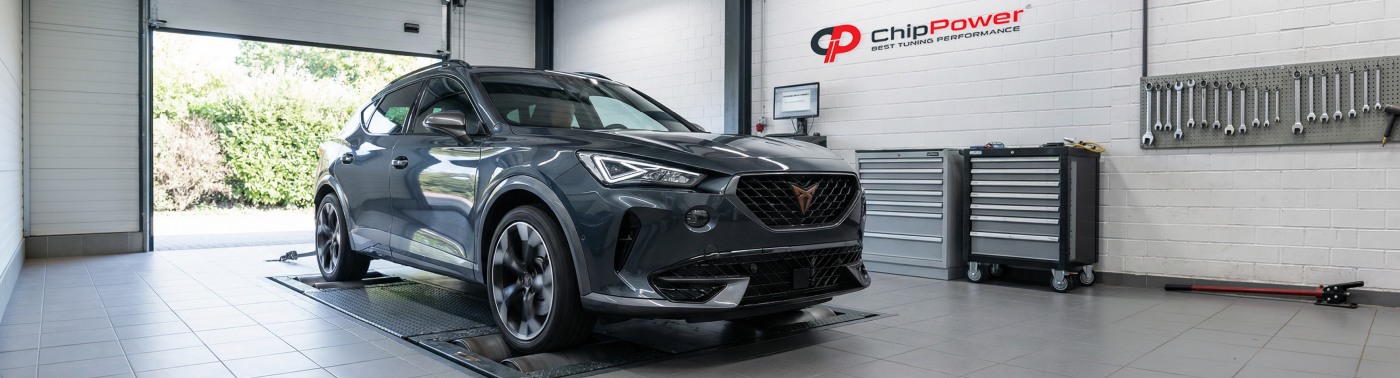
A properly developed chip box or a professionally executed modification uses the factory reserves responsibly.
The problem starts when someone tries to squeeze every last bit of power from the engine without paying attention to temperatures, the turbocharger, or the clutch.
Then instead of “more power,” you suddenly become a major sponsor of your local workshop.
Diesel and Turbo Engines — The Kings of Power Reserves
The biggest power reserves are usually found in:
- turbocharged engines,
- modern diesel engines,
- electronically controlled power units.
Why? Because the computer controls practically everything:
- boost pressure,
- fuel quantity,
- torque,
- engine response.
And if power is electronically controlled, it can also be optimized intelligently.
Naturally aspirated engines usually have much smaller reserves.
Do Manufacturers Know That Drivers Increase Power?
Of course.
It’s no industry secret. Many engines are designed from the beginning with large safety margins in mind.
Manufacturers know perfectly well that an engine capable of producing 220 HP can leave the factory with 150 HP and still operate very comfortably.
That’s why a properly executed modification does not automatically mean “engine abuse.”
Very often, it simply means unlocking the potential that was already there.
Summary
Power reserves in cars are not accidental. They are the result of:
- manufacturer strategy,
- emissions regulations,
- safety considerations,
- marketing,
- engine durability.
Modern vehicles very often have hidden potential that can be used wisely.
The key, however, lies in the quality of the modification and common sense.
Because extra horsepower is great. But it’s even better when it doesn’t end with a spectacular turbo explosion on the highway.